Source: National Institute of Geophysics and Vulcanology (INGV), 02/12/25
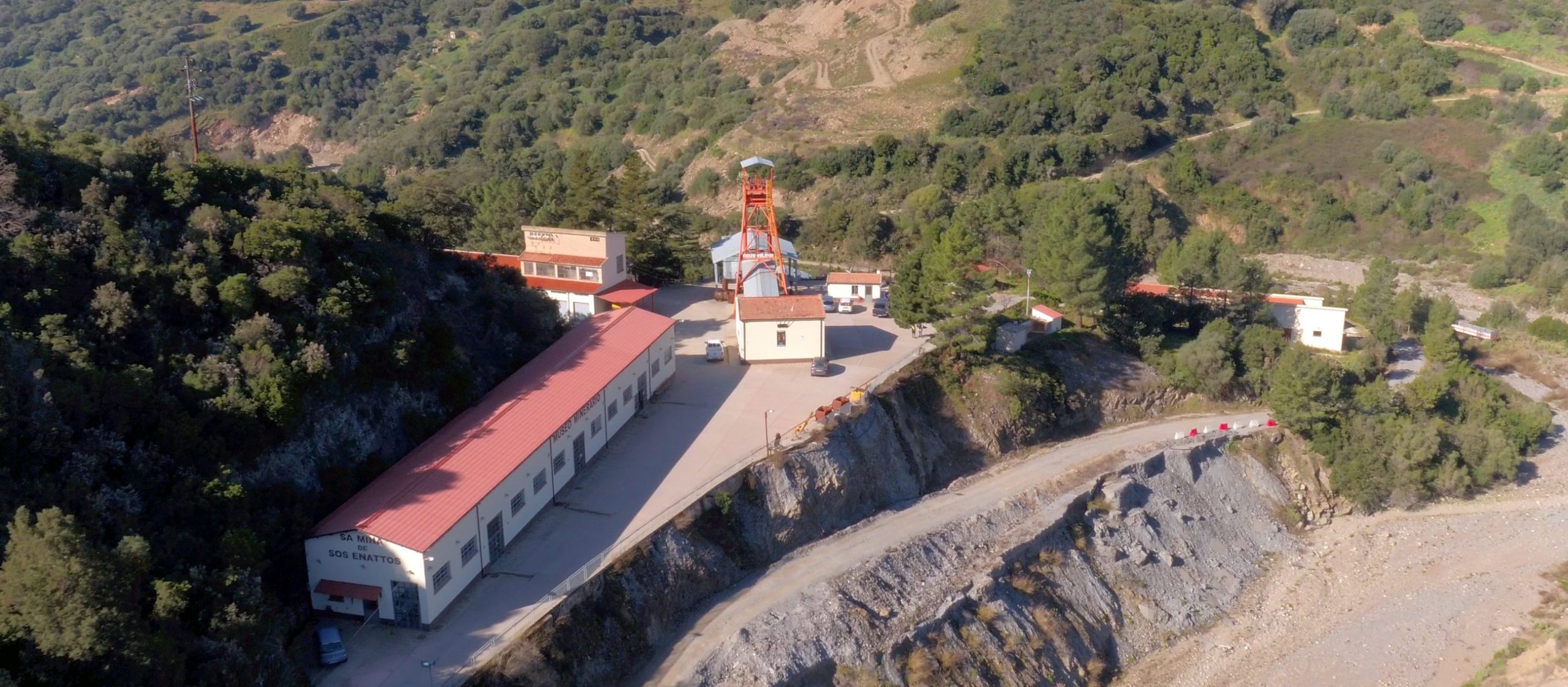
The National Institute of Geophysics and Volcanology (INGV) has approved the establishment of the Geophysical Characterization Center for the Einstein Telescope (CCGET), a new facility dedicated to the in-depth study of the subsurface of Sardinia. With its creation, INGV aims to strengthen its scientific contribution to Italy’s candidacy to host the Einstein Telescope (ET) gravitational-wave observatory in the area of the former Sos Enattos mine, in the province of Nuoro.
Starting in early 2026, the Center will be responsible for coordinating and planning the various geophysical characterization activities intended to enhance the studies supporting the candidacy of the Sardinian site. Among these, a prominent role will be played by an electromagnetic survey that will produce a high-resolution three-dimensional map of the entire area that could host the underground infrastructure. The survey will be carried out using a helicopter equipped with a large antenna flying a few dozen meters above ground and transmitting electromagnetic waves toward the surface. The currents induced in the subsurface will provide detailed information about rock composition, the degree of fracturing, and the possible presence of fluids. Operations will be completed before the summer, and – following the processing of the collected data – further geophysical campaigns will be scheduled to investigate any potential issues.
The new Center, coordinated by the INGV researcher Carlo Giunchi, will operate for three years, linked to the achievement of its objectives and to the outcome of the selection of the site that will host the new observatory. It will work in close collaboration with the National Institute for Nuclear Physics (INFN), the National Institute for Astrophysics (INAF), Sardinian universities, and the local government of the Autonomous Region of Sardinia. It will also strengthen INGV’s contribution within the international ET collaboration, promoting the involvement of its researchers in the development of scientific products and services. Finally, it will carry out communication, training, and outreach activities on the contribution of geophysical investigations not only to the ET project but also to improving knowledge of the Sardinian territory within the complex geological and geodynamics framework that characterizes the Italian peninsula.
INGV has been active at the Sardinian site since 2019 and, more recently, has operated within the activities of FABER (Far fAult oBsERvatory), part of the broader PNRR MEET (Monitoring Earth’s Evolution and Tectonics) project, for which the Institute serves as lead institution. On 9 February 2023, the Ministry of University and Research (MUR) established, by decree of Minister Anna Maria Bernini, a high-level technical-scientific committee to support the Italian candidacy, chaired by Nobel Prize–winning physicist Giorgio Parisi.