by Gloria Nobile
In recent weeks we have dedicated an article to the project “Deep Loop Shaping for Gravitational-wave Detection”, funded by the Italian Ministry of University and Research under the third call of the Italian Science Fund (FIS 3), whose aim is to harness artificial intelligence to improve gravitational-wave interferometers. Also in the field of physics, the FIS 3 call awarded €1,093,000 to the research project “Testing general relativity with multiband gravitational-wave observations”.
The question the project seeks to answer is simple yet ambitious: can gravitational waves test the theory of general relativity? We discussed this with Elisa Maggio, who will coordinate the project and is a researcher at the National Institute for Nuclear Physics.

Elisa Maggio
The project title suggests that general relativity will be “under scrutiny”. In what way?
The idea is to test general relativity using the gravitational waves we currently observe with the global LIGO-Virgo-KAGRA (LVK) network, together with those that will be observed with next-generation interferometers such as the Einstein Telescope (ET) and LISA. We are talking about “multiband” observations because ground-based detectors are sensitive to frequencies between 1 and 1000 hertz, whereas instruments like LISA, which will operate in space and therefore are not subject to terrestrial environmental disturbances such as seismic noise, will allow us to explore much lower frequencies, around the millihertz.
What is the difference between these observational regimes?
Observing in different frequency bands allows us to study different objects characterized by different masses. With current detectors, and in the future with ET, we will observe mergers of black holes with masses of a few hundred times that of the Sun. With LISA, on the other hand, we will be able to observe pairs of much more massive black holes, with masses ranging from hundreds of thousands to hundreds of millions of times the solar mass, merging with each other. Once the data are collected and analyzed, the question we will try to answer is: do we confirm general relativity?
What do you expect from testing this theory?
So far, the observed events have been consistent with the theory of general relativity, which therefore continues to be valid. However, in one case the signal produced by the final object resulting from the merger of two black holes appeared more damped than predicted by the theory. It is possible that these are false deviations, due to the presence of noise overlapping the signal or to current limitations in modeling gravitational-wave signals. The aim of the project is therefore, on the one hand, to understand when and why these discrepancies occur and, on the other, to develop new analysis methodologies capable of mitigating these effects, thereby making tests of general relativity more reliable.
ET will be much more sensitive than current detectors. Will this make it possible to obtain more precise data?
Absolutely. If we were to observe today the same event as the first gravitational wave detection, but with the Einstein Telescope, the signal would be much louder. This would allow us to perform extremely precise tests of general relativity. For example, ET will make it possible to observe the ringdown in great detail, that is, the phase in which the newly formed black hole vibrates at characteristic frequencies and emits gravitational waves. In this way we will be able to verify whether the final object is indeed a black hole as predicted by the theory, or whether small deviations from general relativity emerge.
For Einstein, the existence of gravitational waves is a direct consequence of the theory of general relativity. What would happen if anomalies were to emerge?
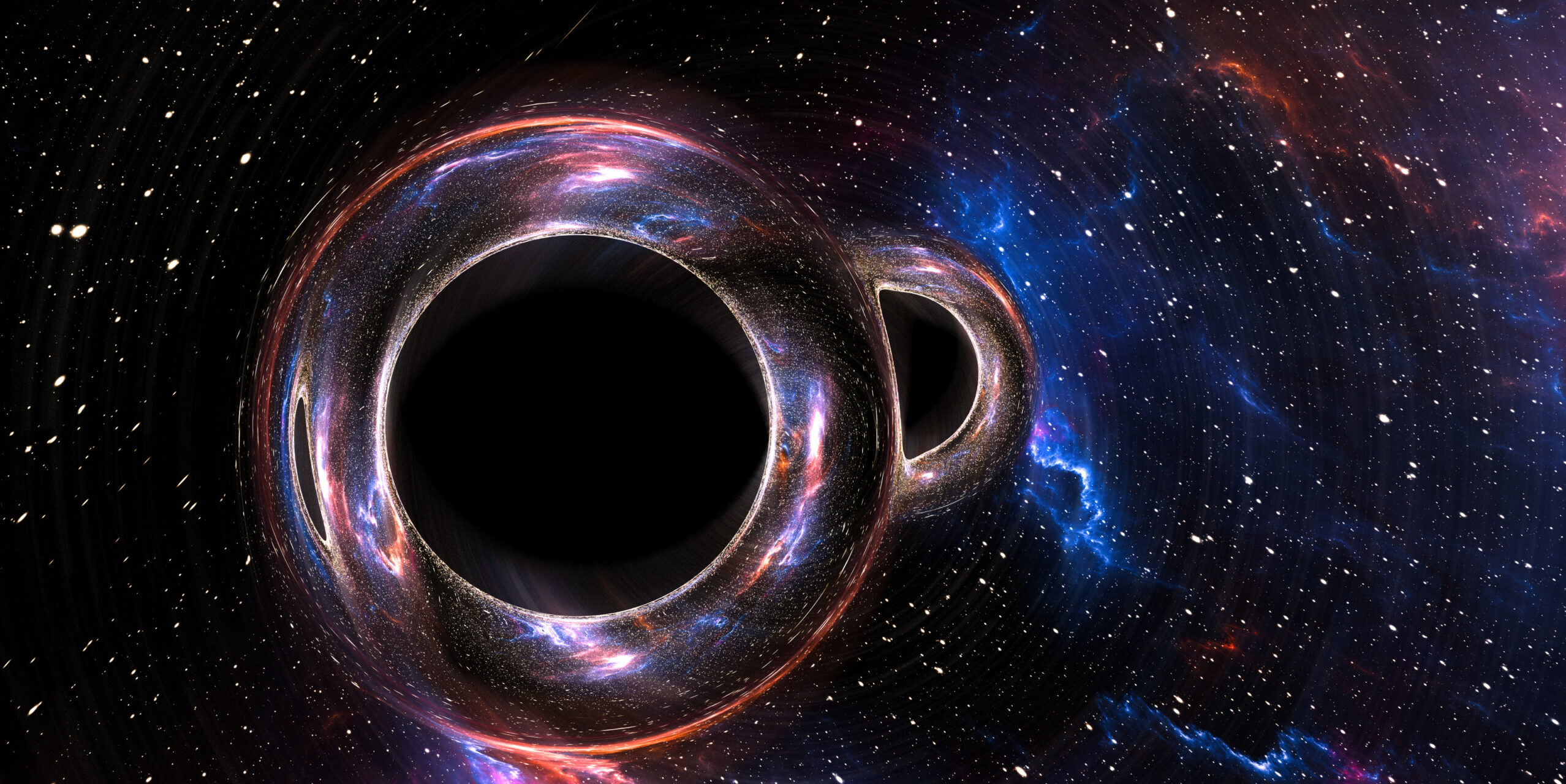
By investigating, we might find many. In particular, my research focuses on the nature of black holes, with the aim of understanding whether they are truly as described by the theory: whether they possess an event horizon beyond which nothing can escape and whether they have a singularity at the center. The goal is that in the future it may be possible to trace back the structure of black holes or neutron stars, to better understand these compact objects and whether they behave as expected.
What will be the first activities of the project?
The first results will come from the analysis of data from the LVK network that are already available. We will study the presence of false deviations in upcoming observing runs, analyzing both the phase in which the two objects spiral around each other and the ringdown of the final object. Subsequently, we will combine this information with that expected from multiband observations with LISA and the Einstein Telescope, simulating signals and noise based on current knowledge. The aim is to develop strategies to mitigate false deviations from general relativity and to place constraints on the properties of compact objects and on modified theories of gravity.
Image credit: Carl Knox, OzGrav, Swinburne University of Technology.