
Source: INGV, 06/05/2026
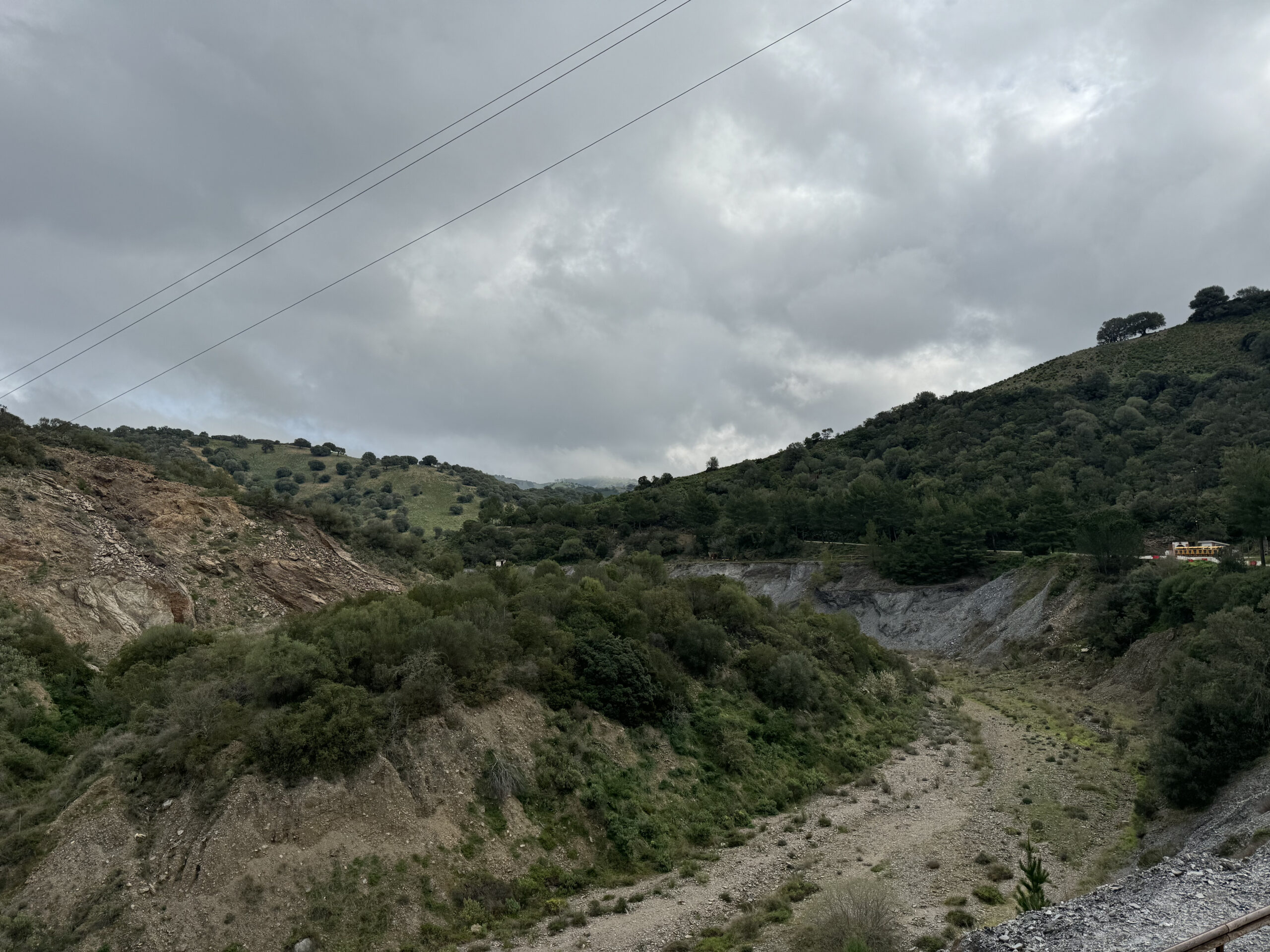
Several data acquisition campaigns, carried out using three dense networks of temporary seismic sensors (arrays), have made it possible to characterize ambient seismic noise at the Sardinian site of Sos Enattos (NU), a candidate location to host the Einstein Telescope, the future European observatory for gravitational waves.
The results of these studies were recently published in the international journal Seismica by a team of researchers from the National Institute for Geophysics and Volcanology (INGV), the National Institute for Nuclear Physics (INFN), the University of Naples Federico II, the University of Sassari, and the Scuola Normale Superiore of Pisa.
The data collected from the three arrays allowed researchers to quantify and characterize local seismic noise (both natural and anthropogenic), along with the subsurface structure.
The study showed that seismic noise levels in the area are extremely low, with a nearly homogeneous distribution of noise sources for frequencies between 10 and 20 Hz, and velocities consistent with the presence of locally generated surface waves. In contrast, below 10 Hz, there is a clear predominance of body waves (P and S) generated by distant sources. Finally, the inversion of surface-wave dispersion curves also suggests a homogeneous subsurface characterized by high propagation velocities.
These results therefore provide further confirmation of the geophysical quality of the Sos Enattos site, highlighting particularly suitable conditions in terms of low seismic noise and subsurface structure, ideal for the activities planned for the future Einstein Telescope.
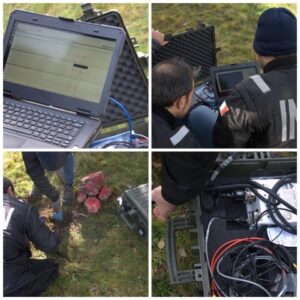
Installation of broadband seismic sensors for the study of seismic noise (Credits: Maira Marzioni).